Why Two Black Pieces From the Same Brand Read as Different Blacks
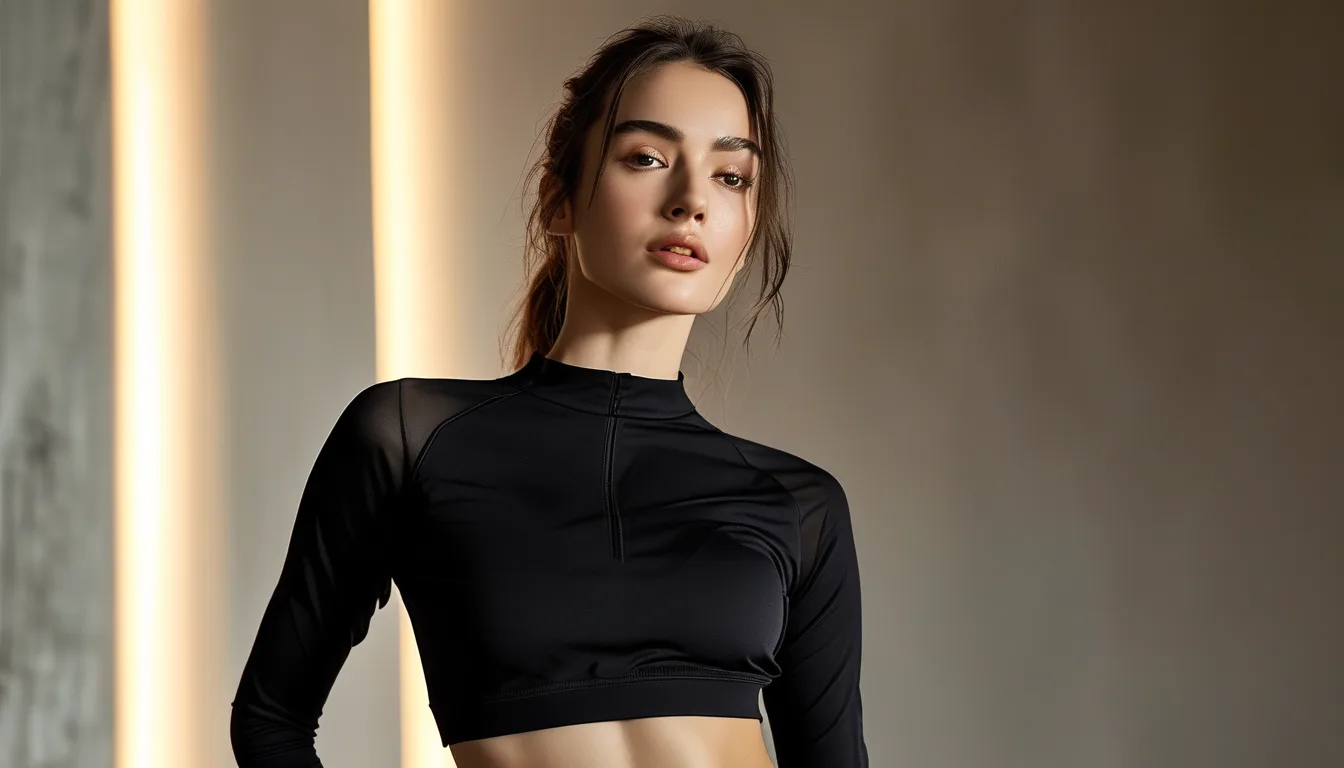
Quick Answer: Two blacks look different mostly because different fibres take dye differently and reflect light differently. Nylon and polyester require different dye chemistry and end up at different depths of black, and fabric structure changes how much light scatters off the surface, so a matte rib and a smooth shiny knit read as different colours even when the dye is identical. Dye lot variation adds a second layer. The reliable fix is to match fibre content and fabric type, not the colour name on the label.
You buy the leggings and the top together. Same brand, same product line, both listed as black.
In the shop they look the same. In daylight one is slightly brown, or slightly blue, or noticeably flatter, and the outfit reads as two blacks rather than one. This happens constantly in activewear and there is a specific reason for it.
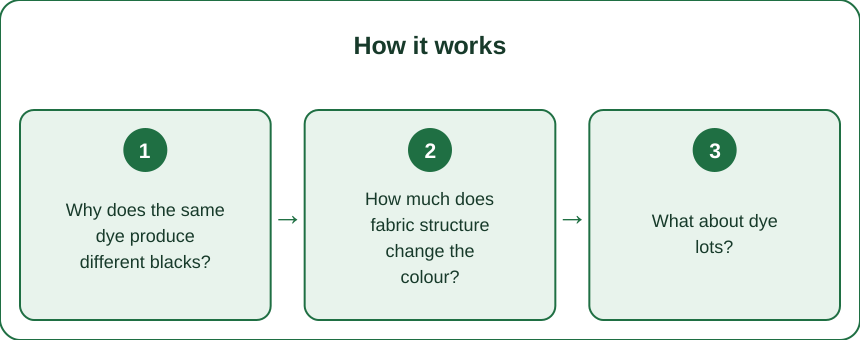
Why does the same dye produce different blacks?
Because the fibre determines what the dye can do.
Different fibres need different dye classes. This is the largest factor and it is invisible on a label that says black.
- Polyester is dyed with disperse dyes at high temperature under pressure. Polyester is hydrophobic and the dye has to be driven into the fibre.
- Nylon is dyed with acid dyes, a completely different chemistry.
- Cotton uses reactive dyes.
- Elastane takes dye poorly in most systems and is often left effectively undyed, which matters because it is present in almost all activewear.
Why a blend complicates it further. A nylon-elastane fabric and a polyester-elastane fabric dyed to the same target will land in slightly different places, because the base fibres are reaching black by different routes. Nylon blacks commonly read slightly warmer, and polyester blacks slightly cooler or bluer, though this varies by mill.
The elastane content is the sneaky variable. Undyed or poorly dyed elastane shows as a very slight lightening or greying of the overall fabric. A garment with 12 percent elastane will read marginally lighter than one with 6 percent at the same dye depth, purely because more of the fibre present is not fully black.
What this means practically: if you want two pieces to match, check the composition label. Two pieces at 78 percent nylon and 22 percent elastane will match each other far more reliably than a nylon piece and a polyester piece from the same collection.
How much does fabric structure change the colour?
More than the dye does, in many cases, because black is mostly about light absorption.
Why black is unusual as a colour. A black surface is one that absorbs nearly all visible light. Anything that causes light to scatter off the surface before it is absorbed lightens the apparent colour. So the surface texture matters enormously, in a way that is much less true for a mid-tone colour.
Structures that read darker:
- Matte, dense knits with a flat surface and little texture
- Brushed or peached finishes, which trap light in the raised fibres
- Tight weaves with minimal surface relief
Structures that read lighter:
- Ribbed fabrics. The ridges catch light along their tops, producing visible highlights. A black rib always reads lighter than a black flat knit.
- Shiny or high-lustre yarns, common in compression fabrics, which reflect specularly
- Mesh and open structures, where you are partly seeing through to skin or another layer
- Textured or seersucker surfaces
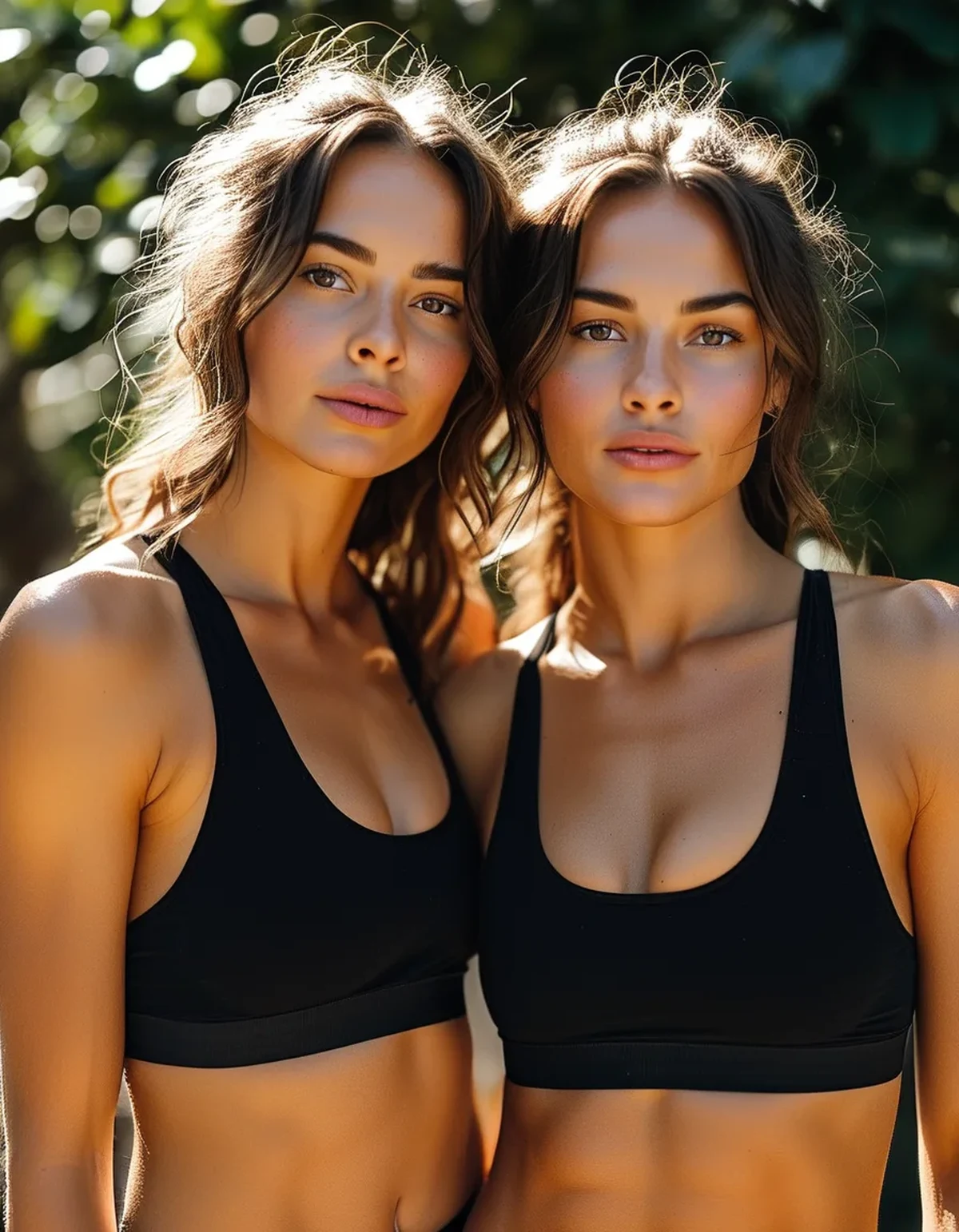
The practical demonstration. Put a ribbed black sports bra next to a smooth black legging in direct sunlight. The rib will look noticeably lighter, and the dye may be identical. This is the most common version of the mismatch and people almost always blame the dye.
Why indoor lighting hides it. Diffuse indoor light produces fewer specular highlights, so textured surfaces look closer to flat ones. Daylight, particularly direct sun, is far more revealing. This is why things match in the changing room and not outside.
What about dye lots?
A real factor, smaller than the two above, and the one most people have heard of.
What a dye lot is. A single batch of fabric dyed together. Small variations in temperature, time, water chemistry, and dye concentration produce small differences between batches. Mills work to tolerances, and the tolerance is not zero.
How big the variation is. For blacks, typically small enough that you would not notice a single garment and large enough to see when two are held together. Textile colour tolerance is measured with a metric called delta E, and a difference below about 1 is generally imperceptible while 2 to 3 is noticeable side by side.
When it bites: buying the matching piece later. The top you bought in March and the leggings you bought in September are almost certainly different lots, and for black specifically, they may also be a different fabric supplier if the brand changed sourcing.
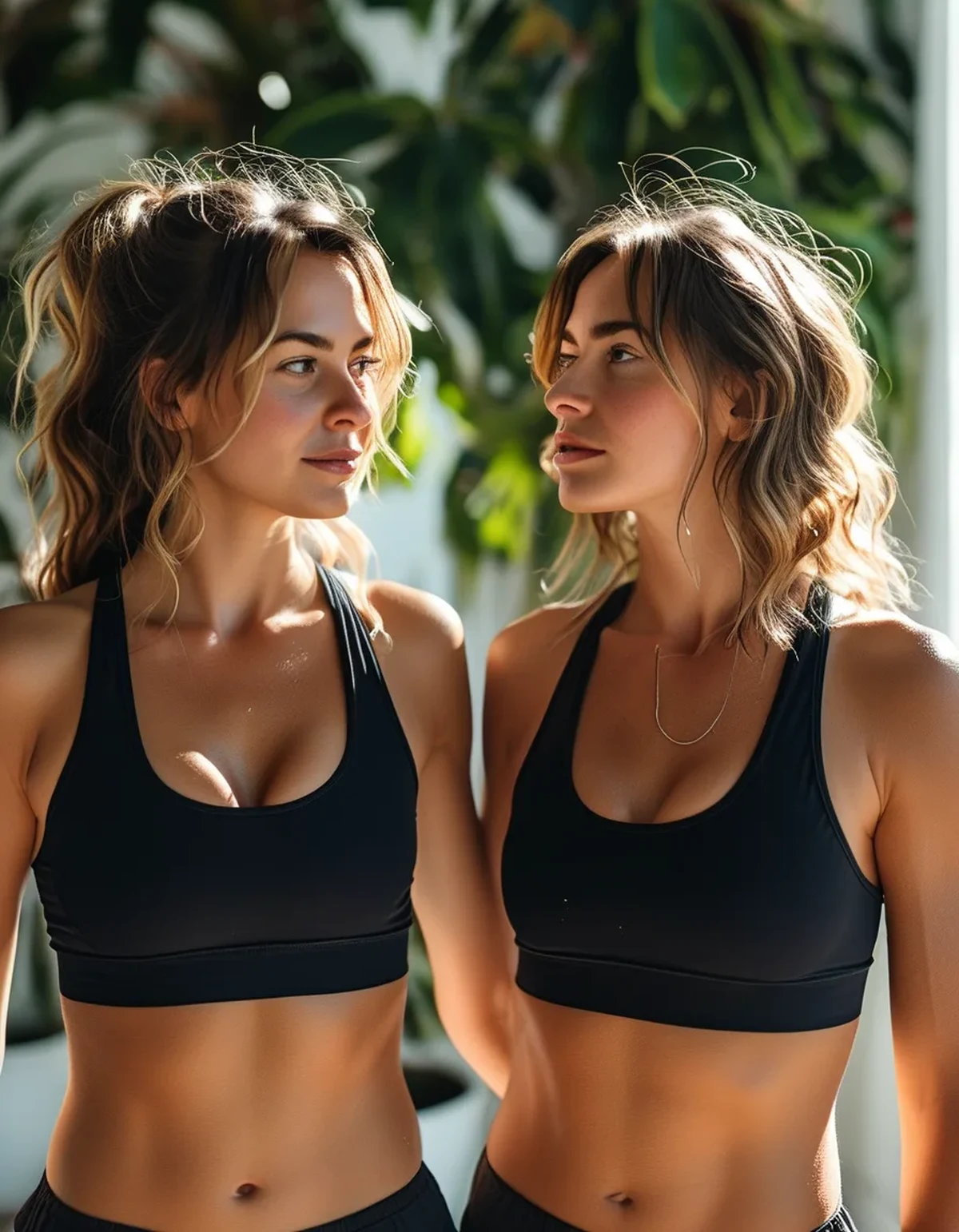
Metamerism is the related effect worth knowing. Two blacks can match under one light source and visibly differ under another, because their spectral reflectance curves differ even though they look identical in the shop. This is why the changing-room match fails outdoors, and it is not a defect and cannot be fixed. The only remedy is checking in daylight before you buy.
The practical rule: if matching matters, buy both pieces at the same time, and take them to a window or outside before deciding.
What Nobody Tells You About Matching Blacks
You cannot fix a mismatch by washing. Washing removes surface finish and slightly lightens both pieces at different rates, so the gap generally widens rather than closes.
Blacks fade unevenly by fibre. Polyester blacks hold colour better than nylon blacks, which are more susceptible to UV and to chlorine. Two pieces that matched when new can diverge within a season purely because one is in the sun more.
Deodorant, sunscreen, and sweat all affect black specifically. Aluminium salts in antiperspirant and the oils in sunscreen cause localised discolouration on black that is far more visible than on any other colour. This produces a mismatch within a single garment, usually at the underarm and the back neck.
Washing black inside out genuinely helps. Abrasion during washing occurs on whatever surface faces outward, and abrasion is what lifts surface fibres and produces a greyed, hazy look. Inside out, cold, and out of the dryer is the whole maintenance protocol.
A brand’s black is more consistent within a fabric than across a collection. Most activewear brands use several different fabrics across a range, so the leggings, the bra, and the jacket may be three different mills. Matching within a fabric family is realistic. Matching across a collection is a coin flip.
The one workaround that always works: use texture as the point. If you cannot match blacks reliably, stop trying. An outfit that deliberately combines a matte black and a ribbed black reads as intentional, because the difference is obviously textural rather than accidental. This is the standard trick in monochrome dressing and it turns the problem into the design.
Photographs exaggerate everything here. Camera sensors handle deep blacks poorly and phone processing raises shadows aggressively, so two blacks that are close in person can look clearly different in a photo. If your outfit looks mismatched in pictures and fine in the mirror, trust the mirror.
Seasonal note: autumn light is lower-angled and warmer than summer light, which increases the visibility of warm-versus-cool differences between blacks. A nylon and polyester pairing that looked fine in July light can read as obviously mismatched in October, with nothing having changed but the sun.
FAQ: Matching Black Activewear, Answered
Why do two black pieces from the same brand not match?
Usually different fibres. Nylon and polyester take different dye chemistry and land at slightly different blacks, and fabric texture changes how much light scatters off the surface, which changes the apparent depth of black.
Does washing make blacks match better?
No. Washing lightens both pieces at different rates, so the difference generally widens. Wash inside out in cold water and skip the dryer to slow fading in both.
How do I buy activewear that actually matches?
Match the composition on the label, not the colour name. Two pieces with the same fibre blend and similar fabric structure will match far more reliably than two pieces from the same collection with different fabrics.
TL;DR:
- Fibre type decides the black. Nylon and polyester reach black by different chemistry and land in different places.
- Fabric texture matters as much as dye, because black is about light absorption and texture scatters light.
- Dye lots and metamerism add smaller effects. Check any match in daylight, not under shop lighting.
- If you cannot match, contrast textures deliberately. A matte-plus-rib pairing reads as intentional.
Check the composition label on your two most-worn black pieces. If one says nylon and one says polyester, that is your answer.
See It in Motion
Seen here: High Waist 8” Yoga Shorts — shop similar styles on bubblelime.com
Keep Reading
This article is for general informational and styling purposes only. Fit, sizing, and product availability may vary.