How to Choose a Jacket That Does Not Break Your Monochrome Outfit
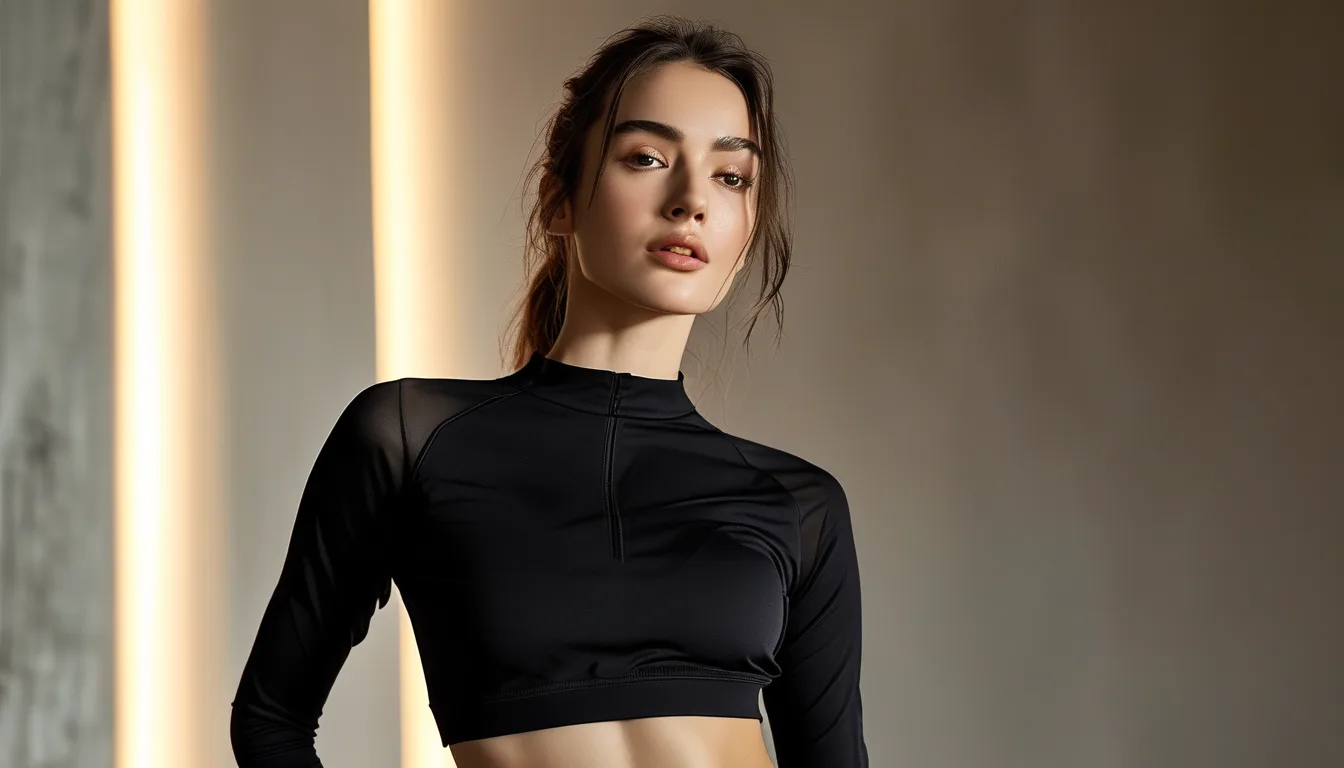
Quick Answer: Choose a jacket in the same color family one or two shades darker, or in a genuine neutral - camel, cream, grey, or a deeper version of the base color. Avoid a contrasting mid-tone, which cuts the vertical line at the hip. Length matters as much as color: a jacket ending at the widest part of your hip breaks the outfit even in a perfect match, while a cropped or longline piece preserves it.
The set looked long and clean in the mirror, and then you put a jacket on and the whole thing shortened.
Color was only half of what went wrong. The other half was where the hem landed.
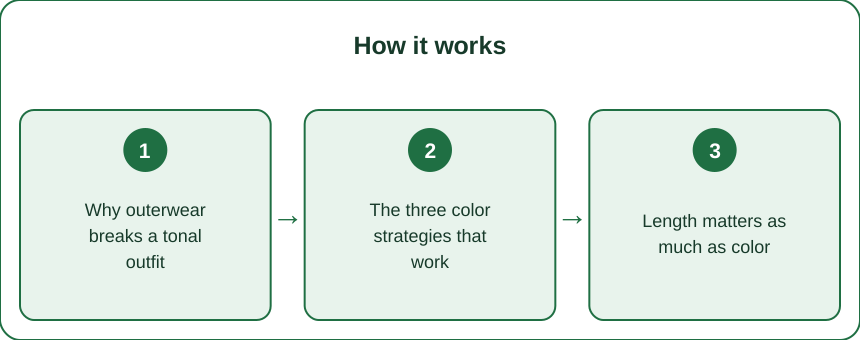
Why outerwear breaks a tonal outfit
Monochrome works by removing horizontal interruptions. With no color change between top and bottom, the eye travels uninterrupted from shoulder to ankle, which is the entire reason the look reads long and expensive.
A jacket introduces two new horizontals at once - the hem and the opening - and both land in the middle third of your body where they do the most damage to that line.
A contrasting color makes both of them visible. A camel jacket over black creates a clear boundary at the hem, effectively dividing you into an upper and lower section.
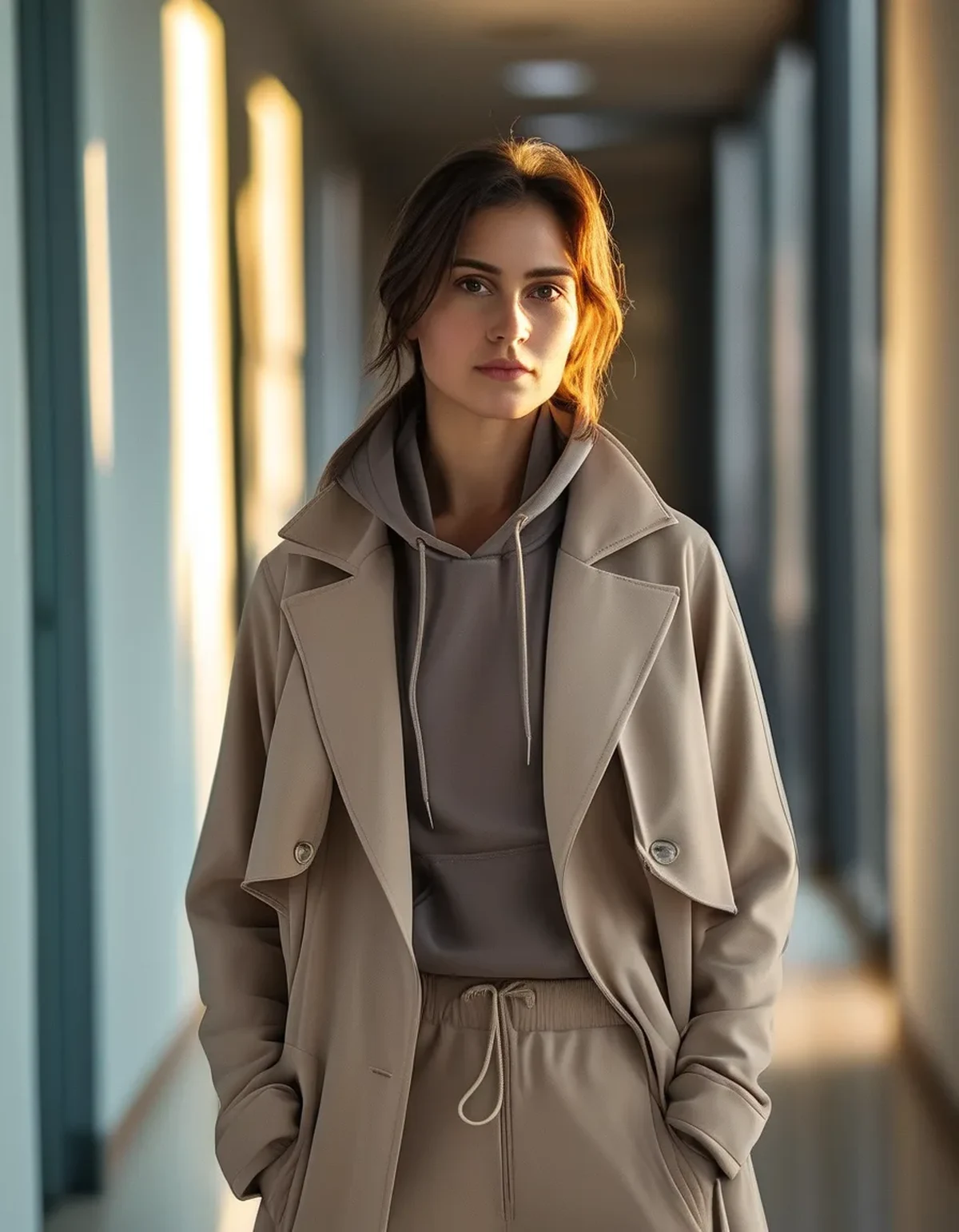
A tonal jacket keeps the hem quiet. A charcoal jacket over black registers as a shadow rather than a boundary, which is why deeper shades of the same family are the safest choice.
And the opening runs vertically, which actually helps. An open jacket creates two vertical lines down the front, reinforcing the effect the monochrome was already producing - which is why a jacket worn open often looks better over a set than a closed one.
The three color strategies that work
Same family, darker. Charcoal over black, deep olive over sage, navy over slate. This is the most reliable option and it works in almost every context because the transition reads as depth rather than as a break.
True neutral. Cream, camel, grey, or stone. These read as a deliberate outer layer rather than a mismatch, and they work particularly well over black and over deep greens and blues.
Same color, different texture. A matte jacket over a technical sheen, or a soft brushed layer over a smooth knit, in the same shade. This is the most sophisticated version and it depends entirely on the colors actually matching - two blacks from different brands frequently do not.
What to avoid: a contrasting mid-tone. A mid-blue jacket over charcoal, or a burgundy over navy, creates a clear division without any of the intentionality of a true neutral.
And avoid a jacket lighter than the base by only one or two steps, which reads as an accidental mismatch rather than a tonal choice. Either go clearly darker or clearly neutral.
Length matters as much as color
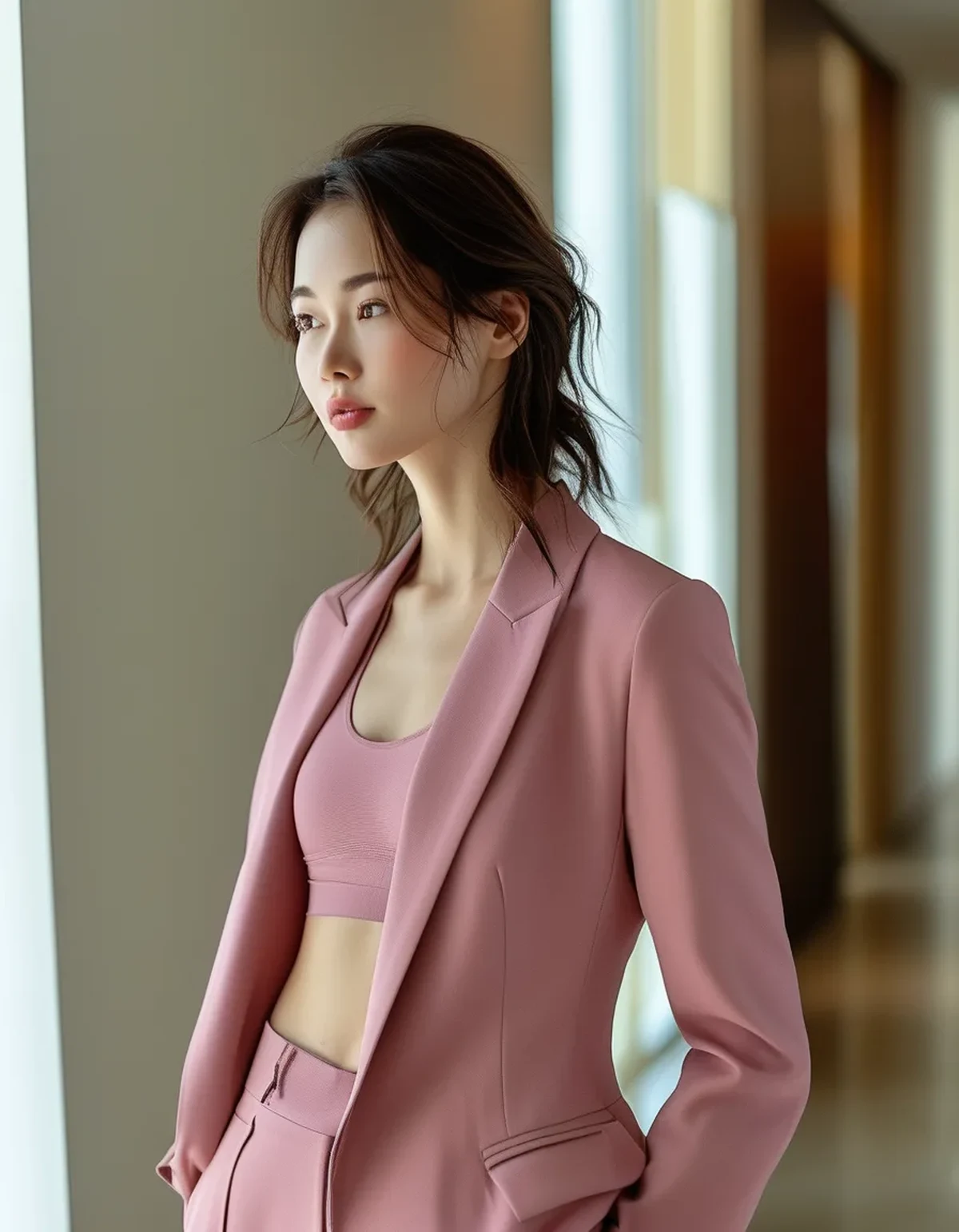
Cropped, ending at or above the natural waist, preserves the line by keeping the interruption high and short. It works particularly well over a high-rise bottom, since the waistband and the hem effectively merge.
Longline, ending at mid-thigh or lower, works for the opposite reason - the eye reads a continuous vertical from shoulder to hem, and the outfit reads longer than it did without the jacket.
The problematic length is hip-level, ending at the widest point of the silhouette. This is also the most common jacket length manufactured, which is why so many people find outerwear ruins an outfit that was working.
Sleeve length is the second detail. Sleeves ending at the wrist bone keep the arm line long; sleeves that swallow the hand shorten the whole figure and are one of the most common fit failures in oversized outerwear.
And check the jacket open and closed in a full-length mirror, since the two produce genuinely different silhouettes and most people only ever check one of them.
Myth vs Fact: Monochrome and Outerwear
Myth: everything has to match exactly. Fact: exact matching across different fabrics is nearly impossible and not the goal. Tonal - the same family at different depths - reads more intentional than a failed exact match.
Myth: black goes with any black. Fact: blacks vary noticeably by dye and by fabric, and two blacks from different brands often read as black and near-black in daylight. Check them together outdoors before deciding.
Myth: a bright jacket adds interest. Fact: it adds a horizontal division. If you want visual interest, add texture or an accessory rather than a competing color block in the middle third.
Myth: monochrome means flat. Fact: it means one color family, and depth comes from texture and shade variation. A flat-looking tonal outfit is usually one with no textural contrast at all.
Myth: outerwear is separate from the outfit. Fact: outdoors, in the cooler months ahead, the jacket is the outfit for most of the time anyone sees you. It deserves the first decision, not the last.
FAQ: Jackets Over Monochrome, Answered
What is the safest jacket color for a black set?
Charcoal or a deeper black in a different texture, then cream or camel as neutrals. Avoid mid-grey, which reads as a mismatch rather than a choice.
Should the jacket be worn open or closed?
Open preserves the vertical line better and is usually the more flattering option. Closed works if the jacket is cropped or genuinely longline.
Does the shoe color need to match too?
Not exactly, but shoes closer to the base color extend the line further. A contrasting shoe stops it at the ankle.
What about a bag?
A bag is where a contrasting color does the least damage and the most good, since it sits away from the body line.
How do I check two blacks match?
In daylight, held together, outdoors. Indoor lighting hides the difference that a photograph in daylight will immediately reveal.
Is a hood a problem?
Only if it adds bulk at the shoulders. A flat, unlined hood is fine; a heavily padded one shortens the neck and widens the upper body.
TL;DR:
- Choose the same color family one or two shades darker, a true neutral, or the same shade in a different texture.
- Avoid contrasting mid-tones, which cut a horizontal line through the middle third of your silhouette.
- Length matters as much as color: cropped at the waist or longline at mid-thigh both work; hip-length breaks the line.
- Worn open, a jacket adds two vertical lines and often improves the outfit; check both open and closed.
- Two blacks from different brands frequently do not match - compare them outdoors in daylight.
As the weather cools, the jacket becomes the outfit for most of the time anyone sees it, which makes it the first decision rather than the last.
Keep Reading
This article is for general informational and styling purposes only. Fit, sizing, and product availability may vary.